
PLC (Programmable Logic Controller)
What Is a PLC?
A PLC (Programmable Logic Controller) is an industrial computer that controls factory equipment and production lines. It plays a central role in automation systems in manufacturing.
This category explains PLC fundamentals, IEC 61131-3, PLCopen, device comparisons by manufacturer and more.
Articles

What Is a PLC?
Explains the role and features of the PLC, and how it relates to what is often called a "sequencer" in Japan.
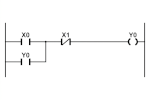
IEC61131-3
Explains IEC 61131-3, the international standard for PLC programming.

PLCopen
An overview of PLCopen and its standardized function blocks.
PLC: Beyond
A collection of ideas on how PLCs might evolve, and what would be interesting to see in the future.
Comparison by Manufacturer
CPU Unit Specification Comparison by Manufacturer
Compares CPU unit specifications from major PLC manufacturers such as Mitsubishi, OMRON and KEYENCE.
Device Comparison by Manufacturer
Compares the device addresses of major PLC manufacturers such as Mitsubishi, OMRON and KEYENCE.
Special Relay Comparison by Manufacturer
Compares the special relays of major PLC manufacturers such as Mitsubishi, OMRON and KEYENCE.

Application Instruction Comparison by Manufacturer
Compares the application instructions of major PLC manufacturers such as Mitsubishi, OMRON and KEYENCE.
System Variable Comparison by Manufacturer
Compares the system variables of OMRON NX and KEYENCE KV-X.
FUN/FB Comparison by Manufacturer
Compares the functions and function blocks of OMRON NX and KEYENCE KV-X.
Motion Control Instruction Comparison by Manufacturer
Compares the motion control instructions of OMRON NX and KEYENCE KV-X.